
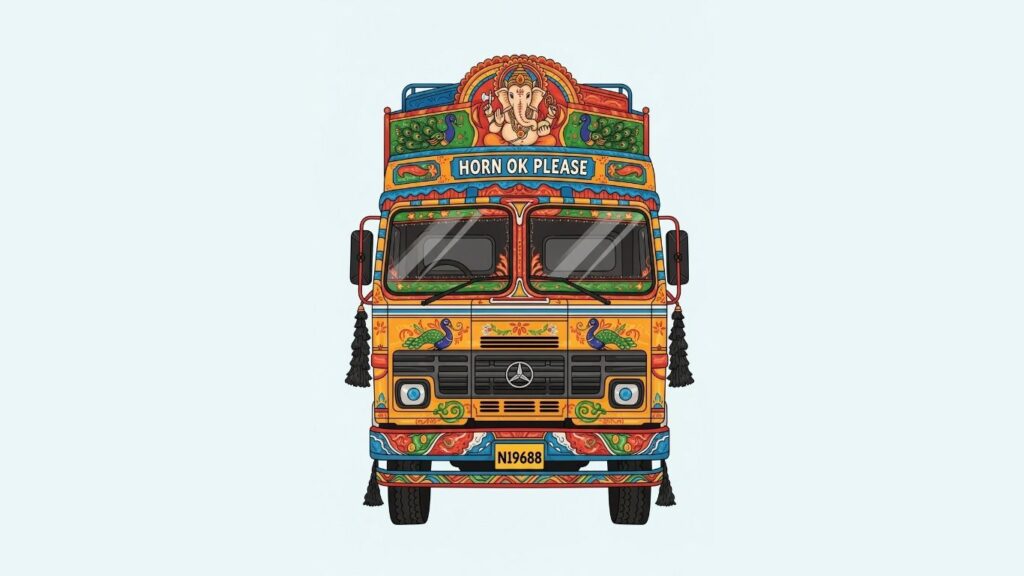
On India’s highways, no two trucks look the same. Some carry portraits of gods, others display fierce animals or poetic slogans, and almost all wear their hearts on their tailgates. These brightly painted vehicles are more than just tools of transport—they are moving galleries, declarations of personal belief, and expressions of pride, humour, and even protest.
Nowhere else in the world has the everyday truck become such a profound visual statement. In India, even logistics comes dressed in colour.
The Origins: Where Function Meets Folk Art
Truck decoration in India began in earnest after Independence, when long-distance road transport became more common. For many truck owners—especially from Punjab, Rajasthan, and Maharashtra—their vehicle wasn’t just a machine. It was home, temple, canvas, and calling card.
Religious symbols offered protection. Images of film stars added glamour. Slogans shared life philosophies. And every truck bore some element of the owner’s regional or cultural identity. Over time, this gave birth to a unique art form—vernacular, anonymous, yet instantly recognisable.
The decoration was mostly done by specialist painters based near truck hubs. With no formal training, these artists developed their own house styles, often passed down through generations.
Typography on the Move: Bold, Ornate, Local
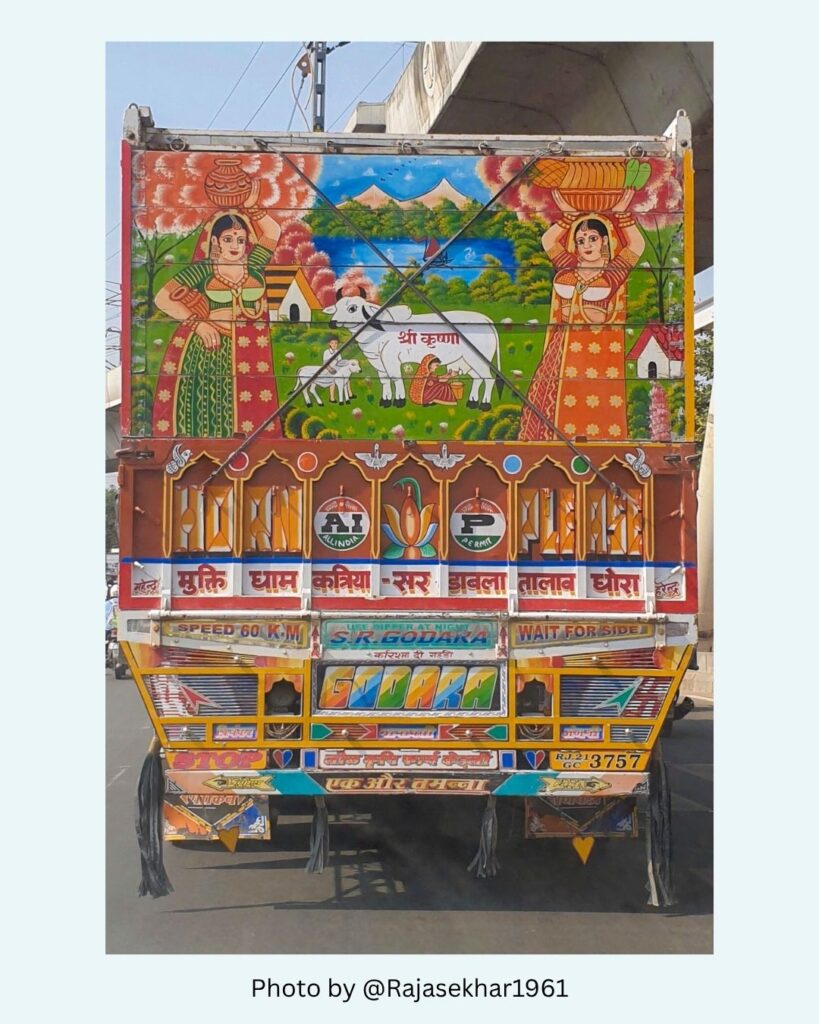
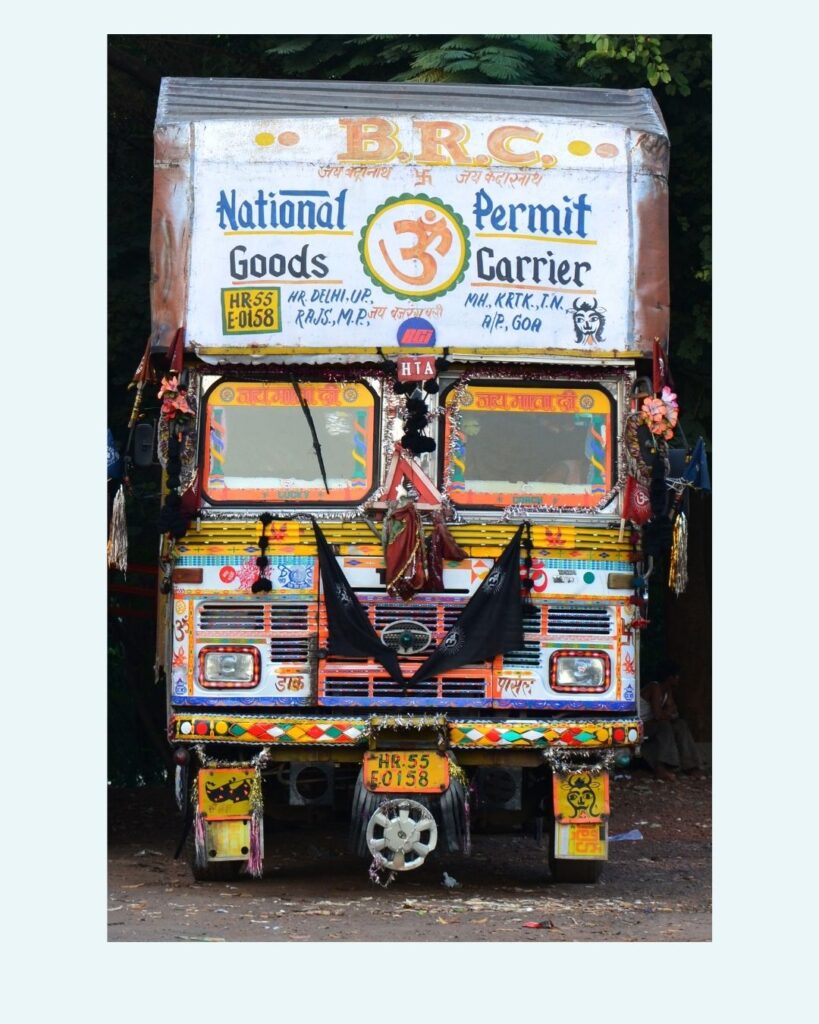
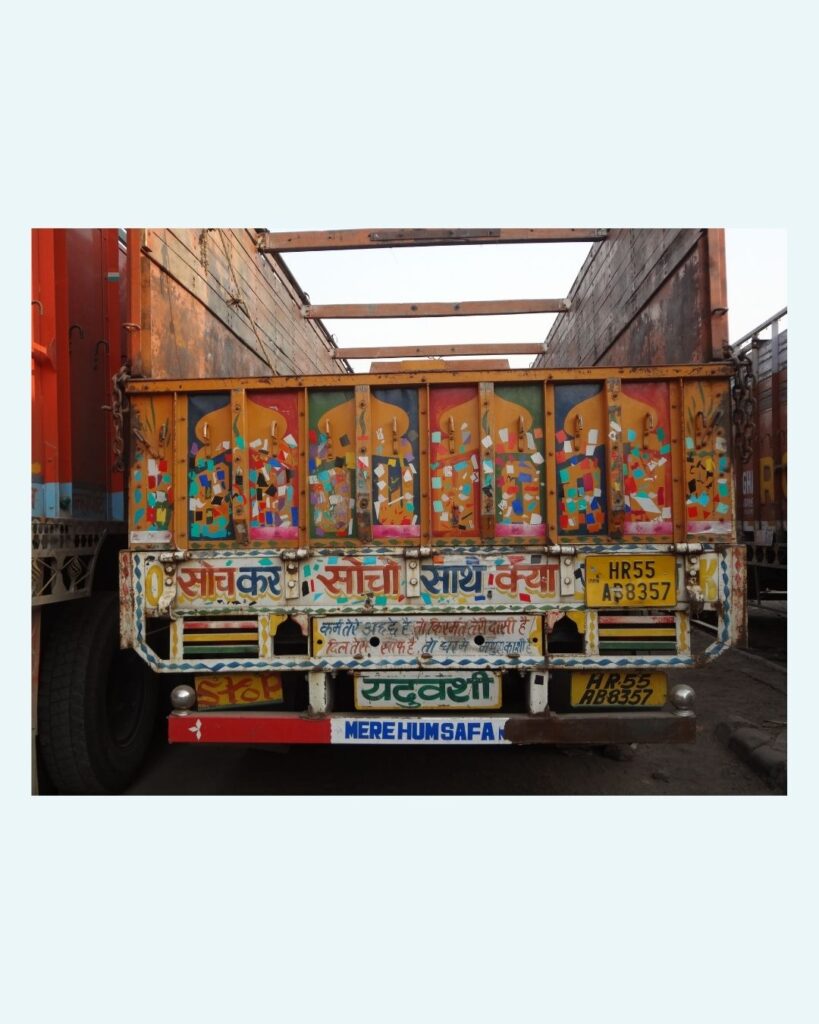
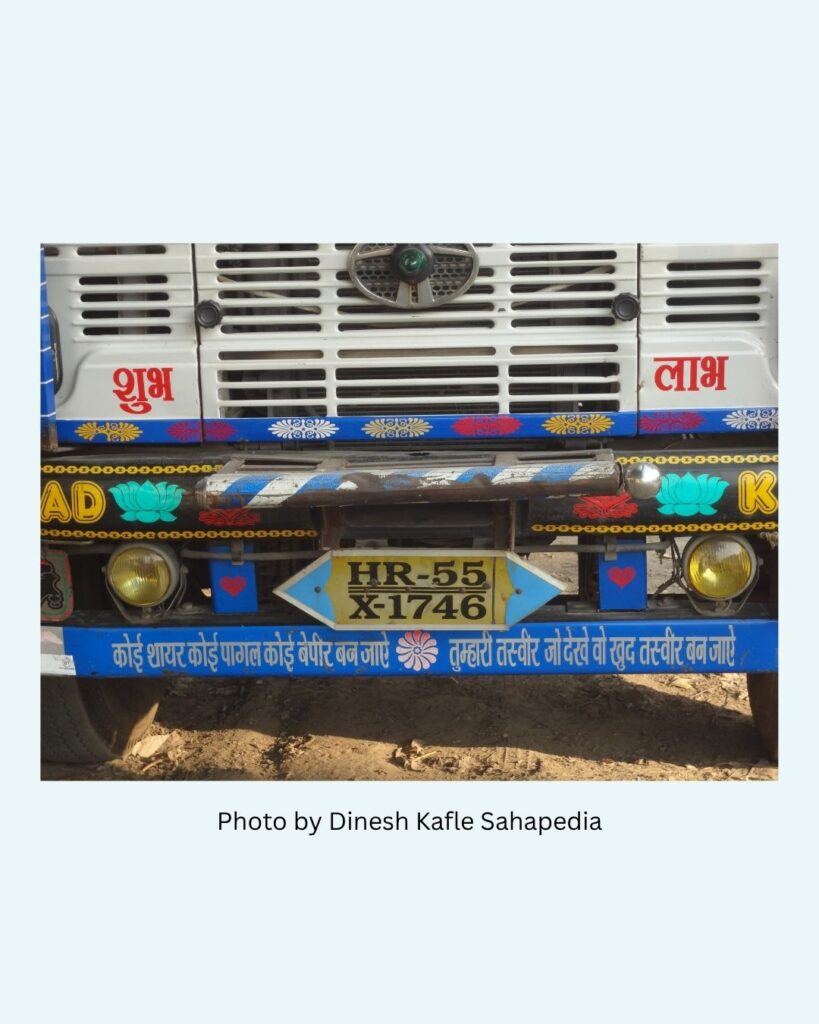
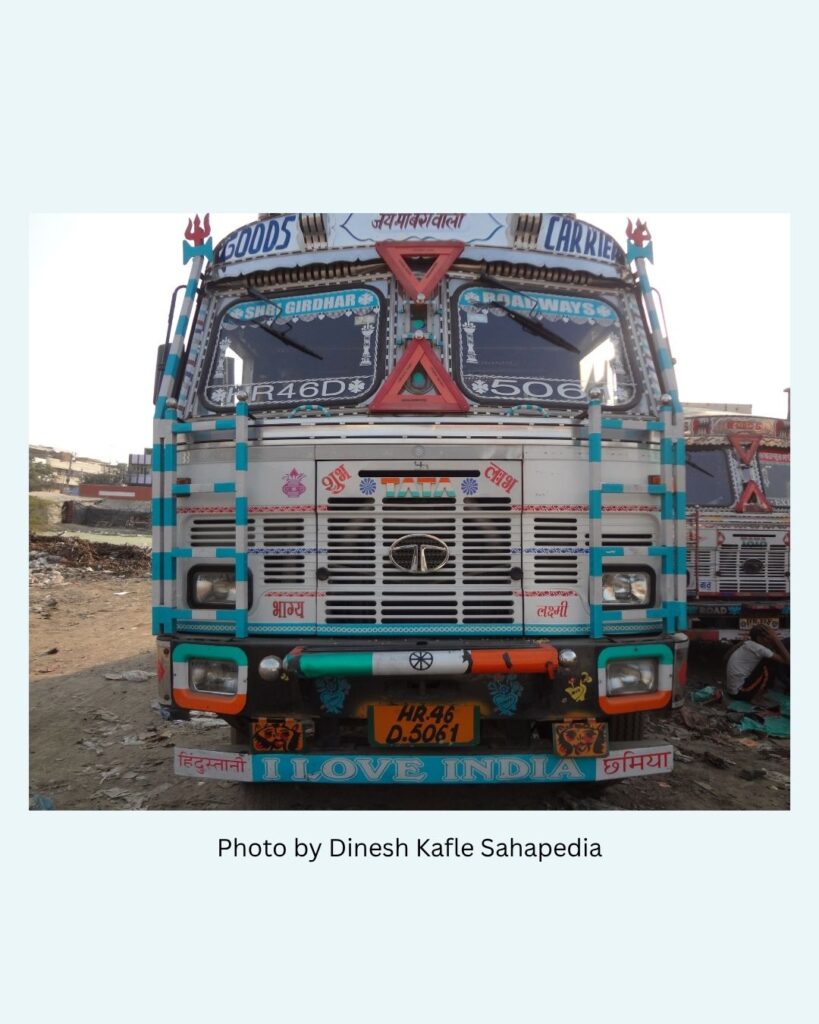
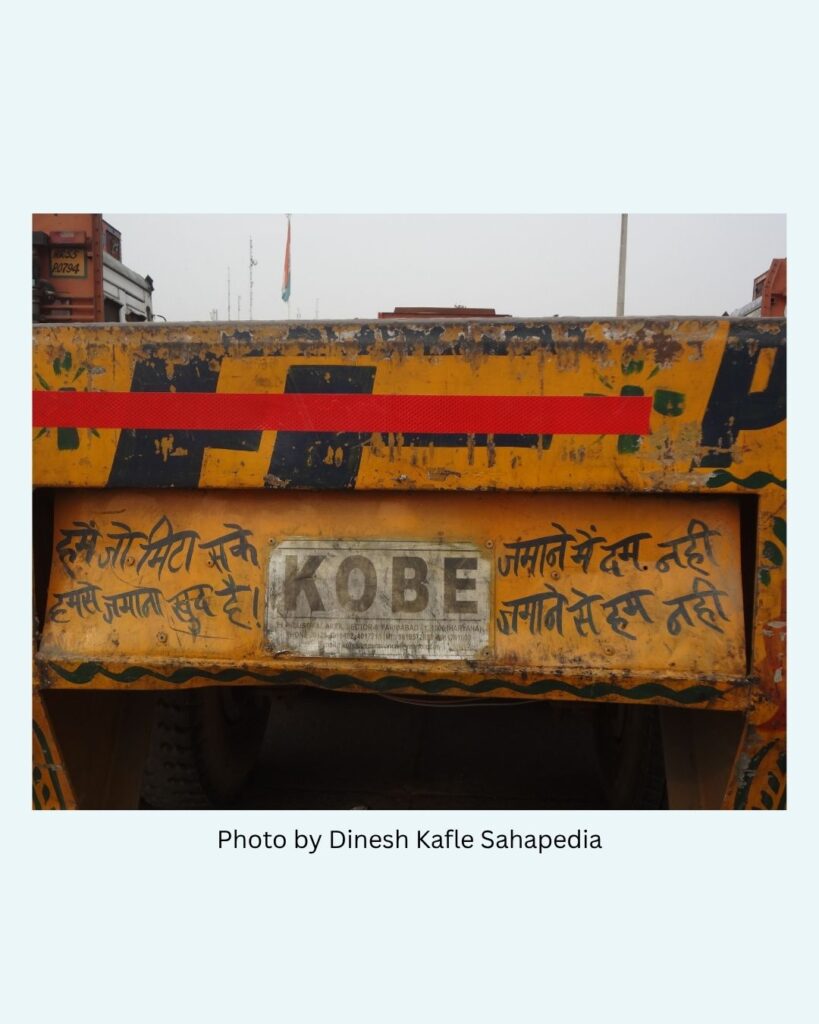
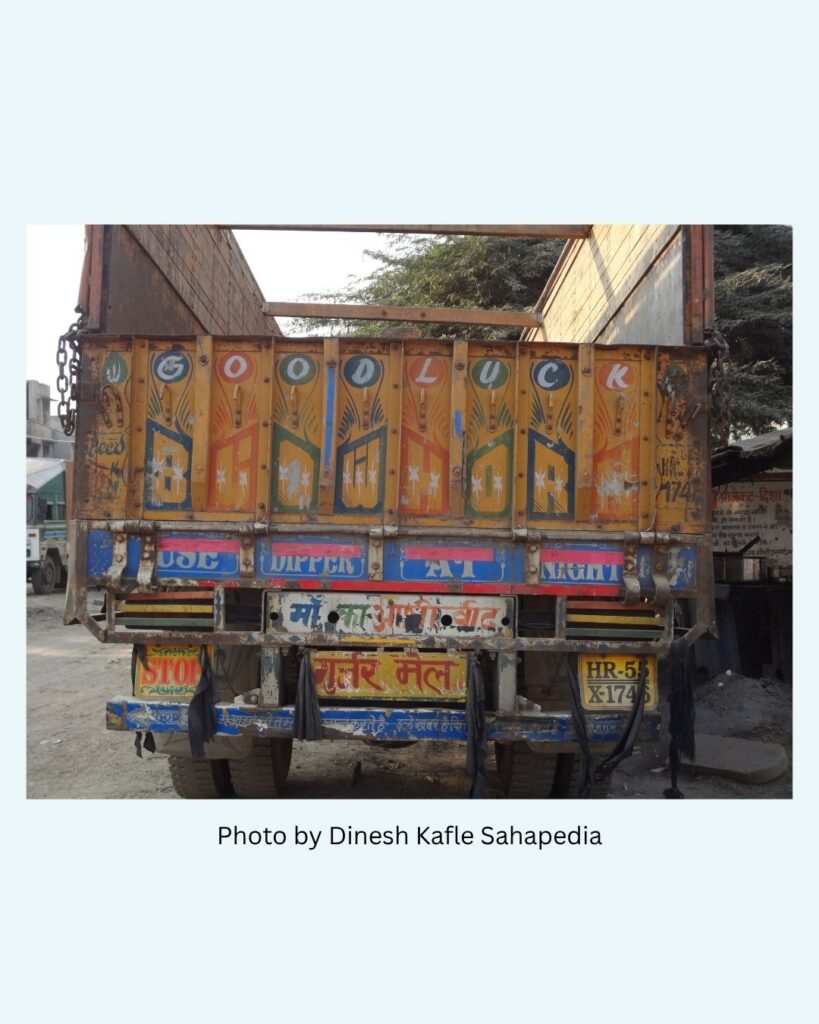
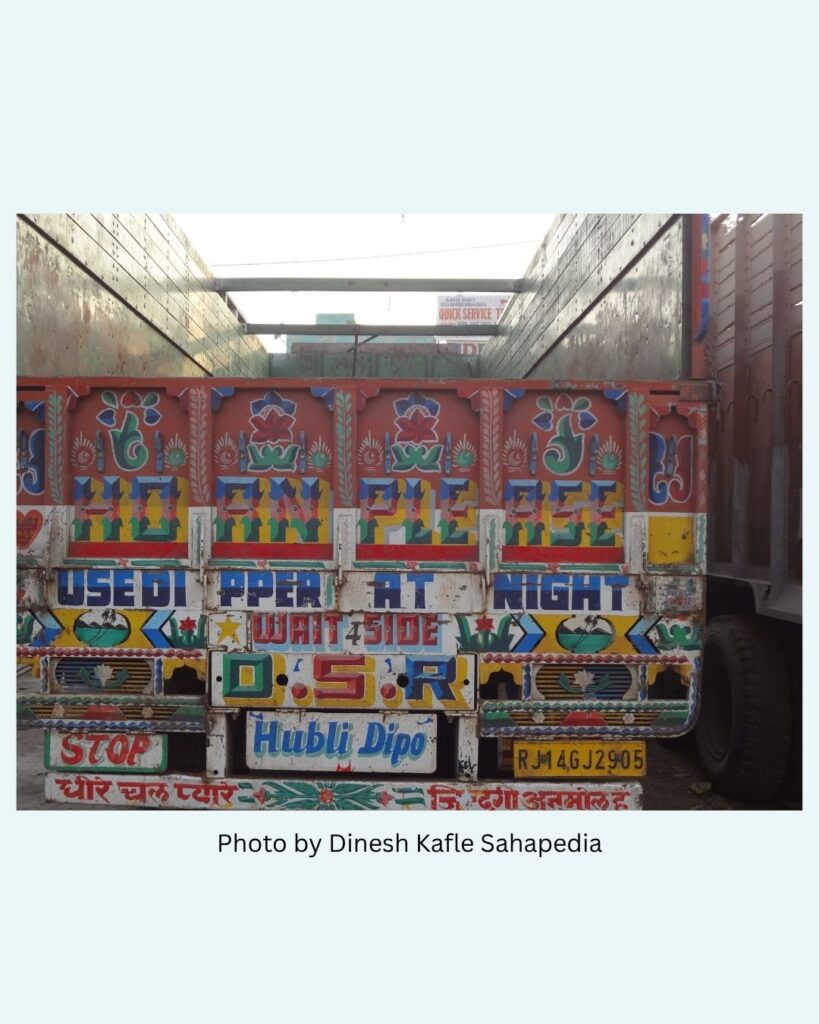
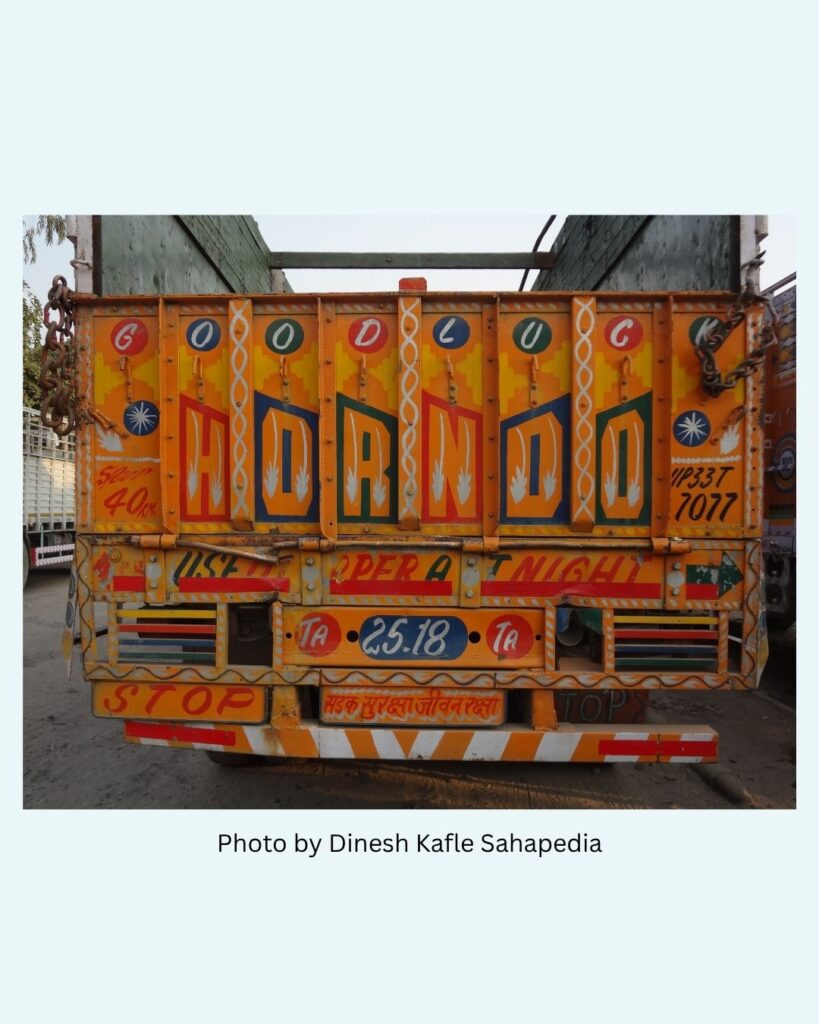
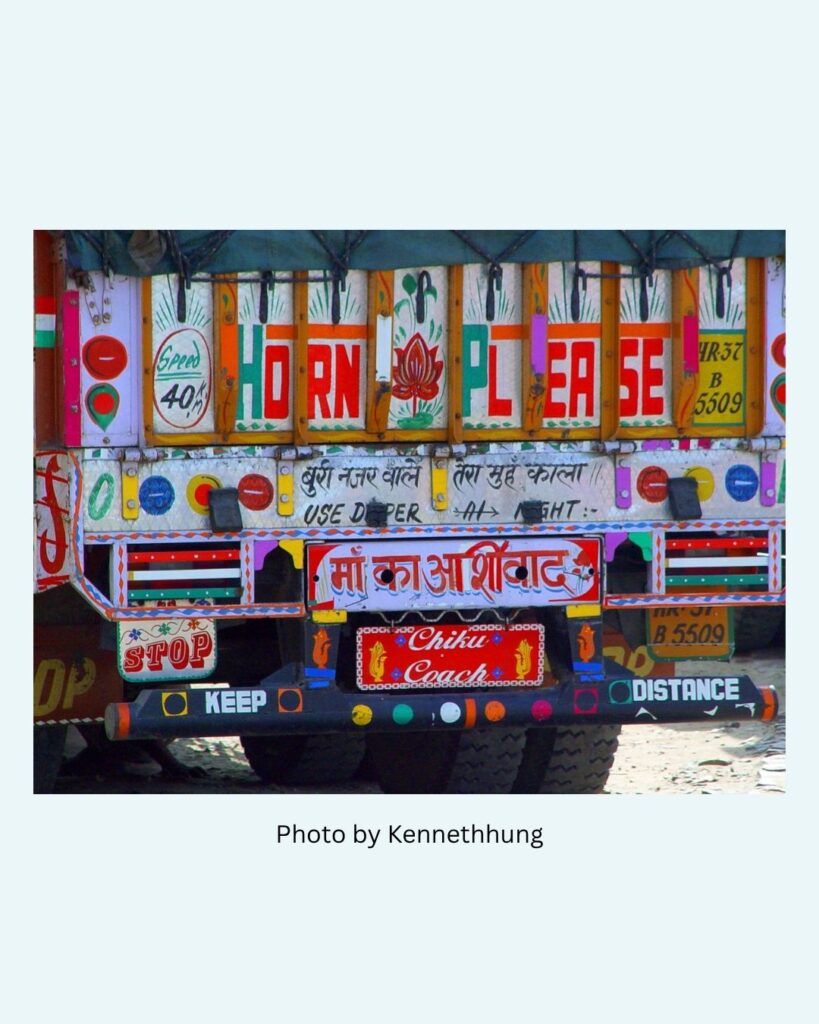
Typography is at the heart of this moving art. Unlike the crisp vectors of digital design, Indian truck lettering is lush, handcrafted, and unabashedly decorative.
The phrases are iconic:
- “Horn OK Please”
- “Use Dipper at Night”
- “Buri Nazar Wale Tera Muh Kala”
- “India is Great”
Each slogan is painted in a stylised typeface, often with 3D effects, curving baselines, drop shadows, and multiple colours. Some trucks include poetic couplets, such as:
“Na biwi ka gham, na saasu ka dar,
Chal pade hain duniya se be-khabar.”
(“No worries of wife, no fear of mother-in-law,
I’ve hit the road, carefree of the world.”)
Many designs include English, Hindi, and sometimes the local language—creating a multi-script visual dynamic that’s rare in formal graphic design.
Each font style is unique to the painter’s hand. The play of scale, colour, and outline is not bound by grids, yet feels perfectly balanced in the rhythm of the road.
Symbols, Colour & Sentiment
The imagery is a riot of references:
- Deities like Ganesha or Durga for protection.
- Peacocks, tigers, lions, and eagles—signs of power and pride.
- Taj Mahals and palaces—symbols of beauty and aspiration.
- Eyes and mirrors—wards against the evil eye.
Vibrant floral patterns wind across panels. The backs of trucks are often lined with tassels, pom-poms, or reflective stickers. Interiors are not neglected—drivers often personalise dashboards with toys, photos, and ornamental fabric.
Every motif has meaning. Every symbol tells a story.
The Artists Behind the Canvas
Truck painters are mostly based near industrial zones—Ludhiana, Jalandhar, Jaipur, Delhi, Indore. They work in open sheds with brushes, enamel paints, and a keen sense of rhythm.
Many began as apprentices and stayed loyal to the trade. They know which designs appeal to which communities. A Sikh trucker may request Guru Nanak’s image. A Rajasthani might want camel motifs. A Tamil Nadu fleet may insist on Kolam patterns and Murugan icons.
One painter famously said, “We paint feelings. Trucks are family to their owners.”
These painters are the unsung folk artists of India’s design history.
Horn Please: The Documentary That Tells the Tale
One of the most evocative explorations of truck art comes through the documentary film Horn Please (projecthornplease.com). This visually rich and thoughtfully narrated film captures the many layers of India’s truck art tradition—from its flamboyant motifs to its deeply personal expressions.
With a kaleidoscope of bright paints, folk symbols, typography, and clever couplets, Horn Please shows how Indian trucks become rolling diaries of their owners’ beliefs, emotions, and identities. The documentary traces the origin and evolution of this age-old folk form and reveals how truck art not only beautifies but communicates—expressing religious sentiments, cultural values, and sometimes even social critique.
More than a visual archive, the film explores how this art form affects the lives of the artists and truckers themselves, and poses a timely question: Can this form of expression, once celebrated for its authenticity and individuality, survive the age of vinyl stickers, corporatized fleets, and homogenized highways?
Fittingly, the film’s title—Horn Please—is drawn from the iconic signage found on almost every Indian truck. Originally a practical instruction for overtaking, the phrase has since become a cultural meme, its ubiquity turning it into a symbol of an entire subculture of mobile art.
Changing Times: From Paint to Pixels
In recent years, however, this vibrant tradition is under threat.
Strict regulations now discourage decorative painting in the name of road safety and uniformity. Cheaper, faster vinyl stickers have replaced hand painting. Truck owners, pressured by margins, opt for speed over beauty.
But all is not lost. Designers and cultural historians are beginning to document this form. Fashion and lifestyle brands are collaborating with artists to create truck-art-inspired clothing, stationery, and décor.
The Indian truck is becoming an icon of design—not just on roads, but on runways, catalogues, and curated walls.
Conclusion: A Folk Aesthetic Worth Preserving
Indian truck art is not accidental. It is intentional, soulful, and joyous. It transforms a functional object into a personal statement, blending typography, art, and cultural identity in a uniquely Indian way.
In a world obsessed with minimalism, this maximalist tradition reminds us of something deeper:
Design can be democratic. Art can travel. And sometimes, beauty rides a dusty highway in a diesel-powered frame.