
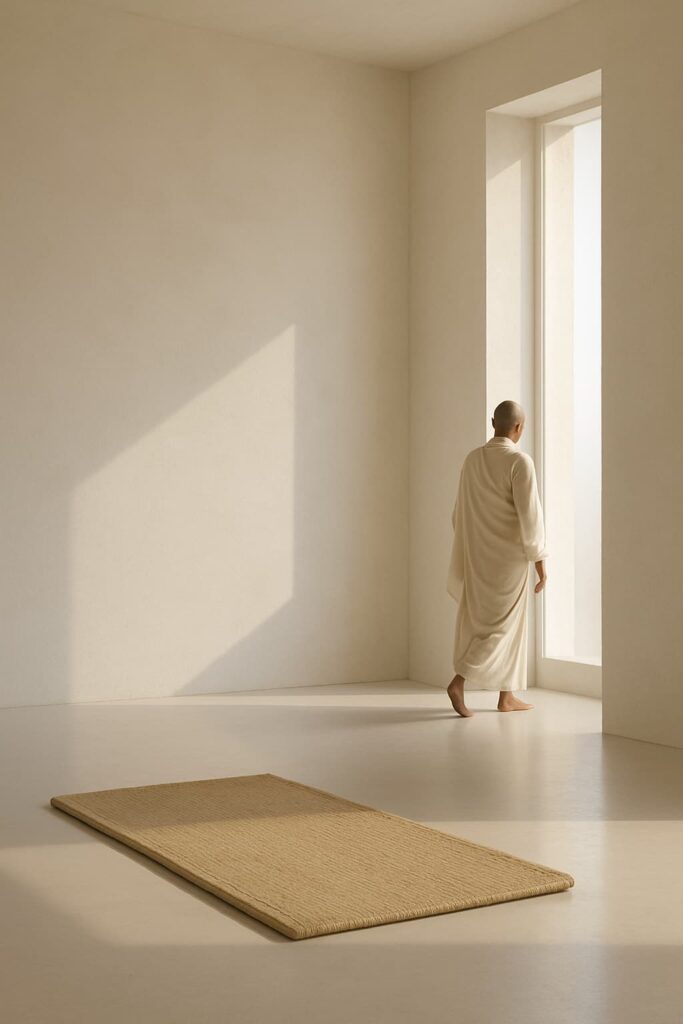
At first glance, Minimalism—a 20th-century design movement—and Aparigraha, an ancient Jain principle of non-possessiveness, may seem worlds apart. One expresses itself through clean lines and white space; the other through spiritual self-restraint. Yet beneath their surfaces, both share a profound, enduring truth: less can lead to more—more clarity, more peace, more meaning.
Minimalism in art and design emerged as a reaction to excess. It seeks to eliminate visual noise, material clutter, and conceptual distraction. Whether it’s the pared-down geometry of Donald Judd’s sculptures or the silence of a Tadao Ando building, minimalist creations emphasize essence over embellishment. Reduction, here, is not emptiness—it is space made intentional. It is presence without chaos.
Aparigraha, one of the five fundamental vows in Jain philosophy, similarly encourages the individual to let go of excess—not just in terms of possessions, but also attachment to ego and identity. It is a path toward balance, harmony, and liberation. By consciously limiting desire and resisting accumulation, Aparigraha fosters a life rooted in awareness, simplicity, and compassion.
Where These Paths Converge
Reduction as Clarity:
Minimalism removes the unnecessary to reveal the truth of form. Aparigraha removes attachment to reveal spiritual clarity.
Conscious Living:
Both advocate intentional choices—in what we create, consume, and value.
Resistance to Materialism:
In a consumer-driven world, both movements offer an antidote grounded in restraint and mindfulness.
Spiritual Aesthetic:
The serene quiet of minimalist design—its emptiness, its calm—mirrors the meditative life of a Jain monk. Stillness becomes sublime.
In today’s world of overconsumption and constant stimulation, this convergence is more relevant than ever. Sustainability, slow living, and mindful design all echo the shared ethos of Minimalism and Aparigraha. Both remind us that beauty is not always in the abundance of things, but in their thoughtful absence.
When design meets inner discipline, the result is not just elegance—but ethics. Not just clarity of form—but clarity of self.