
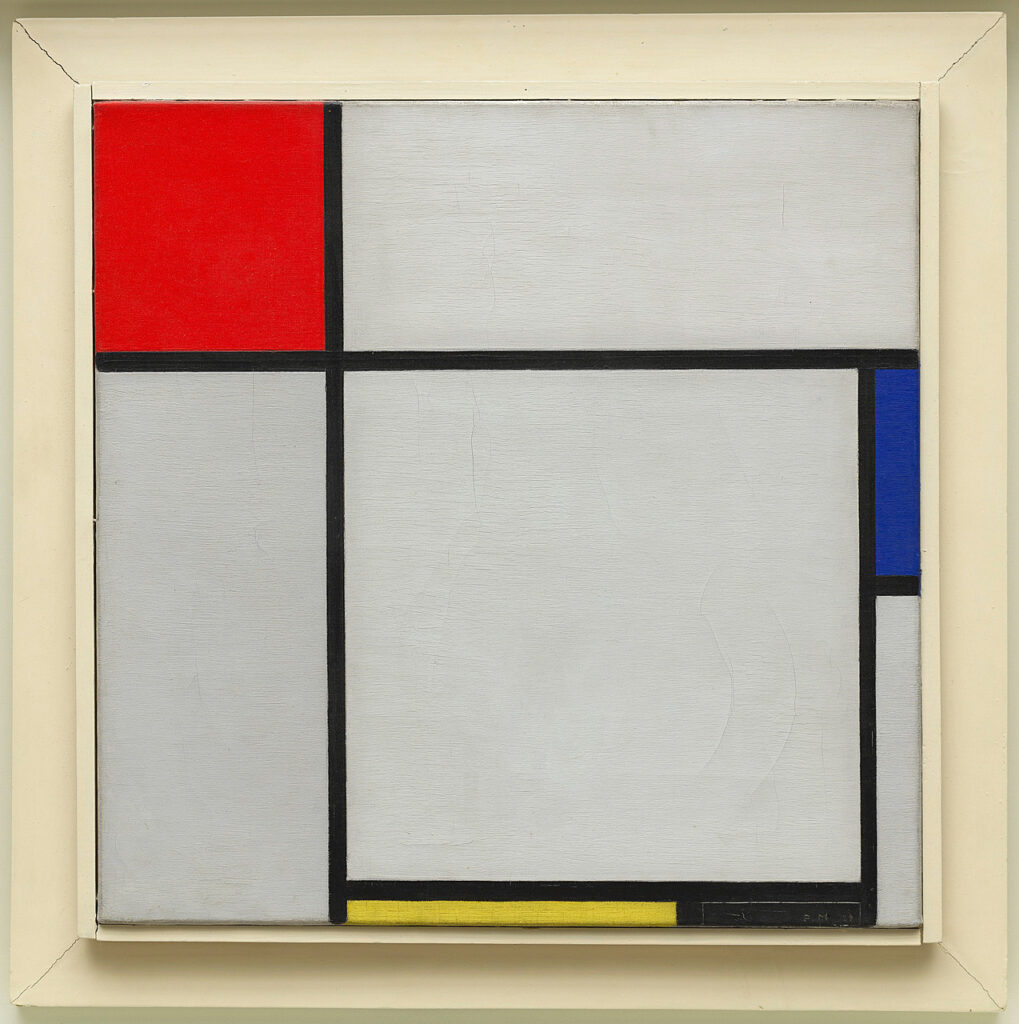
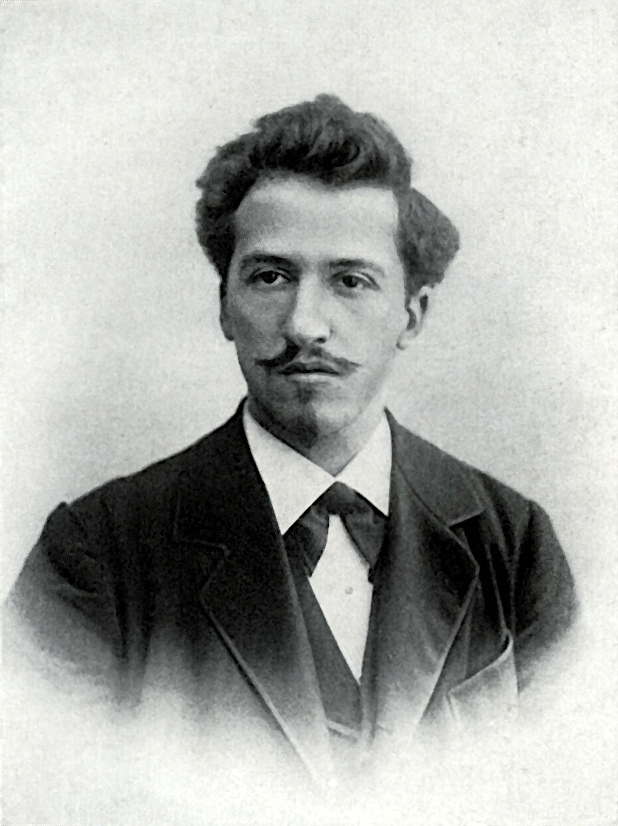
Piet Mondrian, the Dutch painter best known for his stark compositions of red, blue, and yellow within rigid black grids, profoundly influenced the trajectory of modern art. What began as an evolution from representational landscapes to pure abstraction ultimately became a visual philosophy: neoplasticism. Mondrian sought harmony through balance, stripping art of narrative, depth, and even curves, to reveal what he believed was the underlying order of the universe.
His signature style—characterized by primary colors, horizontal and vertical lines, and asymmetrical balance—was not merely aesthetic. It was spiritual. Mondrian was deeply influenced by Theosophy and believed that pure abstraction could lead to a higher plane of consciousness. By reducing form and color to their most elemental expressions, he aimed to express universal truths.
Mondrian’s vision found resonance far beyond painting. His work inspired architects, designers, and fashion icons alike. The De Stijl movement, which he co-founded, laid the groundwork for modernist architecture—seen in the minimalism of the Bauhaus and later in mid-century design. Yves Saint Laurent’s 1965 “Mondrian dress” is an iconic example of how his visual language transcended the canvas.
In the digital era, Mondrian’s influence remains palpable. His grids anticipated the modular logic of interfaces, city planning, and even algorithmic design. Museums, tech logos, and advertisements continue to echo his precise geometry and color blocking.
Mondrian didn’t just create a style—he redefined what art could be. By eliminating the unnecessary, he asked the modern world to look deeper into structure, space, and clarity. His legacy is a testament to the power of reduction, and to the enduring human quest for balance in a chaotic world.
References:
Britannica https://www.britannica.com/biography/Piet-Mondrian
MoMA https://www.moma.org/artists/4057-piet-mondrian
Google Arts and Culture https://artsandculture.google.com/entity/piet-mondrian/m0crnb5