
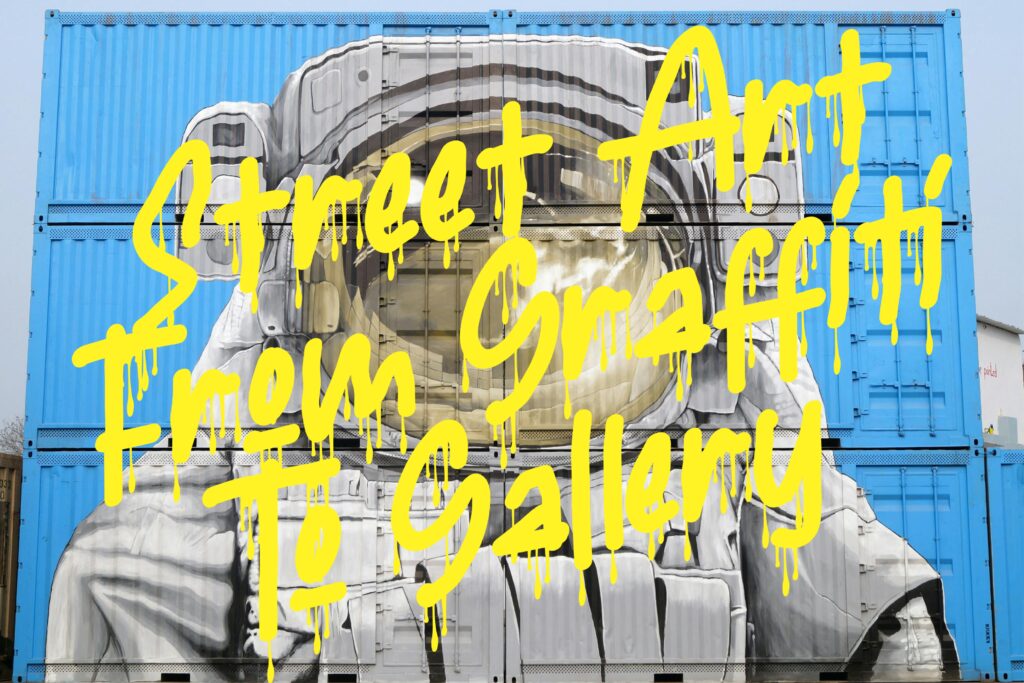
Once dismissed as urban vandalism, street art has undergone a remarkable transformation over the past five decades—migrating from shadowy underpasses and subway trains into the climate-controlled world of galleries and auction houses. What began as a visual rebellion has matured into a dynamic global art movement, one that challenges hierarchies, redefines public space, and defies easy categorisation.
The movement’s genesis lies in 1970s New York City, where early taggers like Taki 183 and later cultural icons such as Jean-Michel Basquiat and Keith Haring began to treat the urban environment as canvas. Initially, graffiti was raw and territorial, tied to identity and visibility. But as the visual language evolved—from wildstyle lettering to socially charged murals—it caught the attention of critics and curators. “It was art before it was allowed to be called art,” notes curator Rafael Schacter, co-editor of The World Atlas of Street Art and Graffiti.
Is Street Art Always Urban?
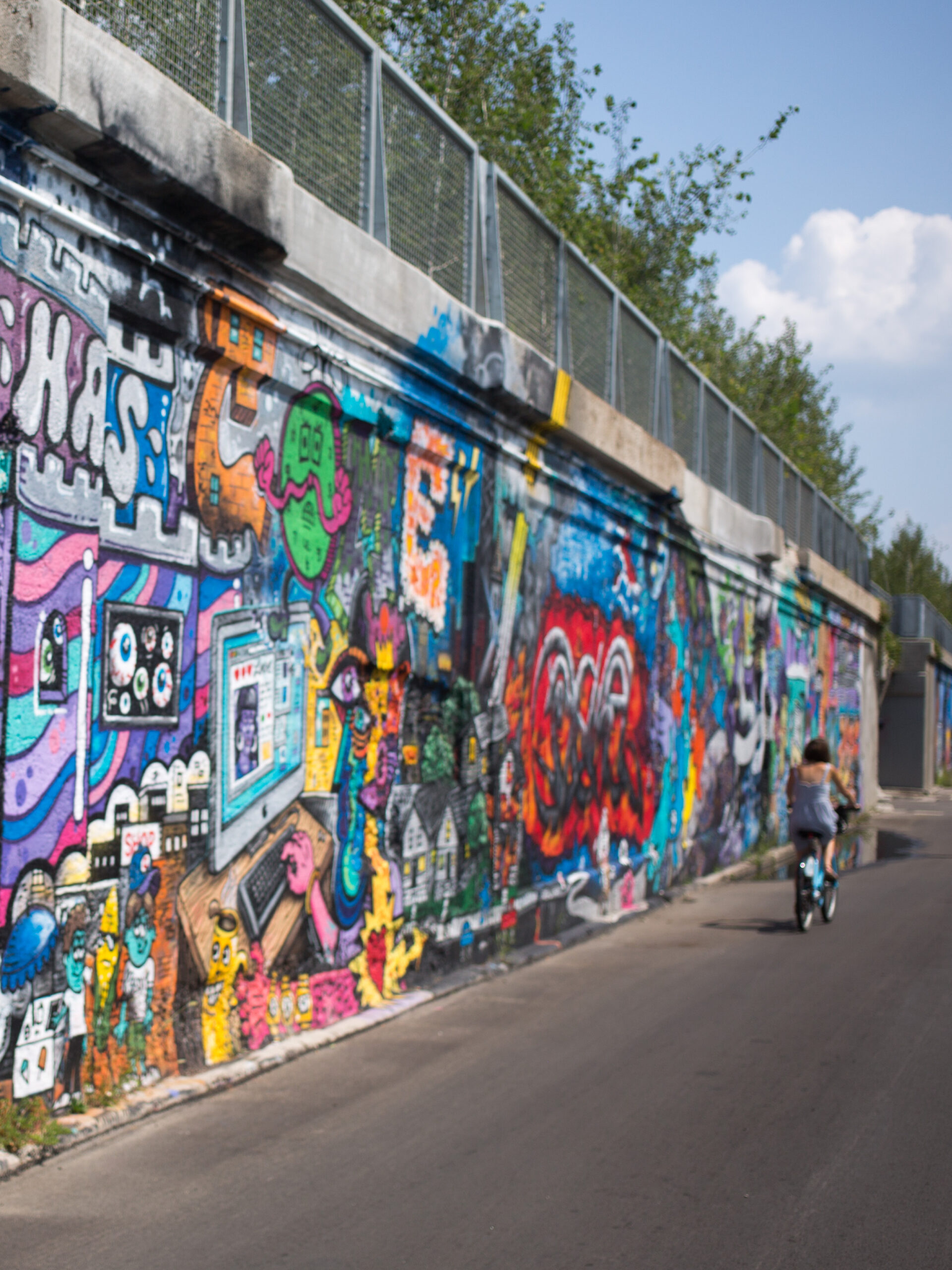
Graffiti Along The Bloomingdale Trail Chicago: This lively stretch of wall art along Chicago’s Bloomingdale Trail (also known as The 606) bursts with surreal characters, neon colours, and cartoon chaos. Blending humour with social commentary, it turns a former railway line into a vivid open-air gallery for local and international artists. Credit: Victor Grigas / Wikimedia Commons
Although street art emerged in cityscapes—where walls are plentiful and audiences dense—it has increasingly ventured beyond the urban grid. From Brazil’s favelas and South Africa’s townships to remote Italian hamlets and Himalayan villages, artists have used street art to enliven rural and semi-urban spaces. Projects like Painted Villages or Saype’s biodegradable land murals challenge the notion that street art belongs only to concrete. Wherever there’s a wall—or even a field—street art finds a way to speak.
By the 1980s, the wall between street and gallery began to thin. Haring’s subway chalk drawings led to solo shows in Europe; Basquiat’s neo-expressionist scrawls entered the blue-chip market. Across the Atlantic, Berlin’s post-wall landscape and London’s East End became fertile grounds for politically charged and stylistically daring street work. In Paris, stencil artist Blek le Rat pioneered the genre that would later be globalised by the elusive Banksy.
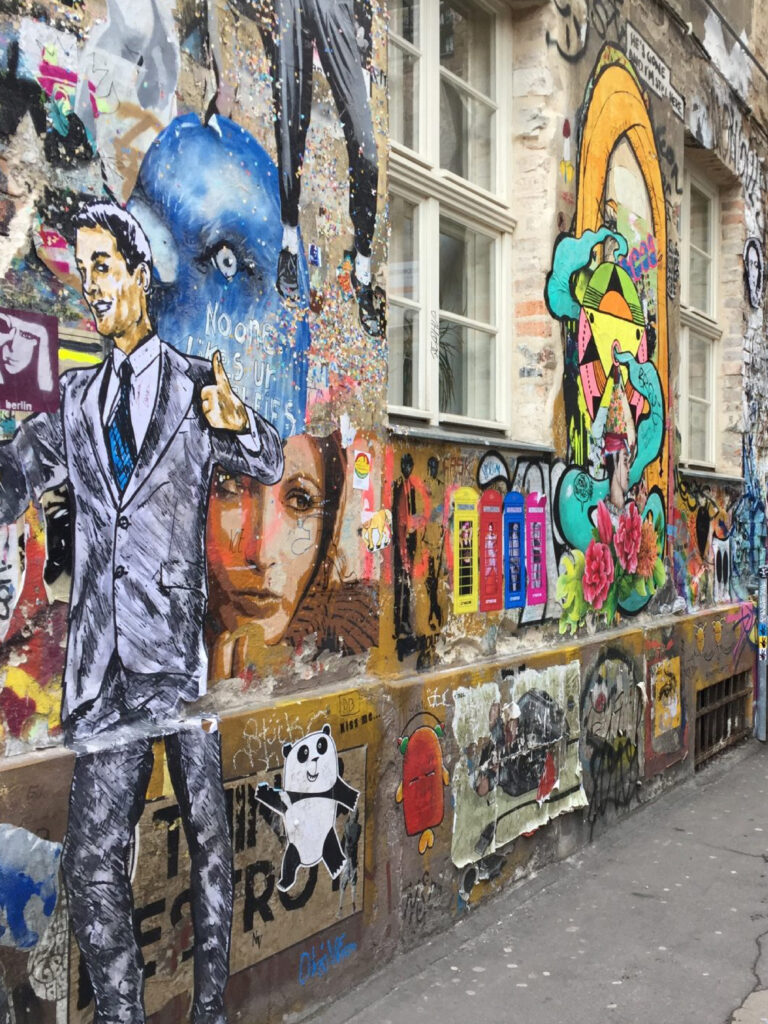
This vibrant alley in Berlin’s Hackescher Markt is a living canvas of global street art, combining paste-ups, stencils, murals, and graffiti in a layered explosion of colour and expression. Known as a hub for independent voices, it exemplifies the city’s embrace of street art as a democratic and evolving cultural dialogue.
Credit: https://www.ulysses.travel/en/street-art-berlin/
“Street art democratised visual culture,” says Élodie Lambert, director of the Urban Expressions Biennale in Lyon. “It wasn’t just about rebellion—it was about reclaiming the city as a space for creativity, community, and commentary.”
Credit line: By Erdalito. – Own work, CC BY-SA 3.0
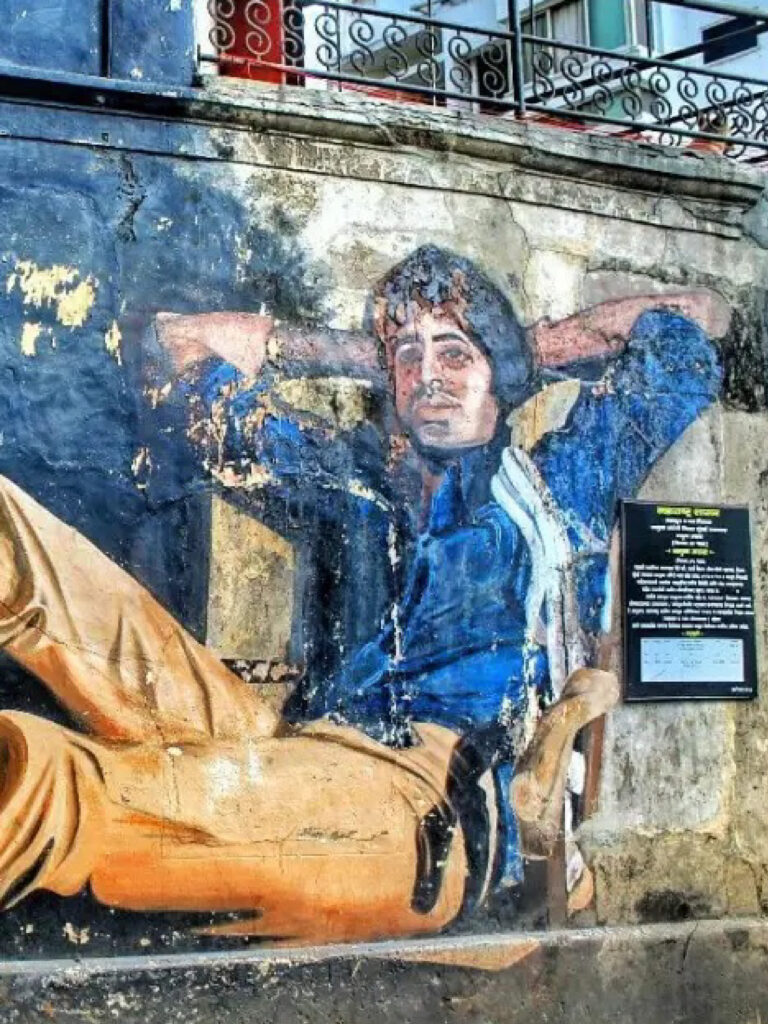
This mural in Bandra, Mumbai pays homage to Amitabh Bachchan’s iconic 1975 film Deewaar, capturing his laid-back yet intense screen presence. Weathered by time yet full of charisma, it’s a striking example of Bollywood’s imprint on India’s street art landscape.
Credit: https://azureskyfollows.com/bombay-wall-art/
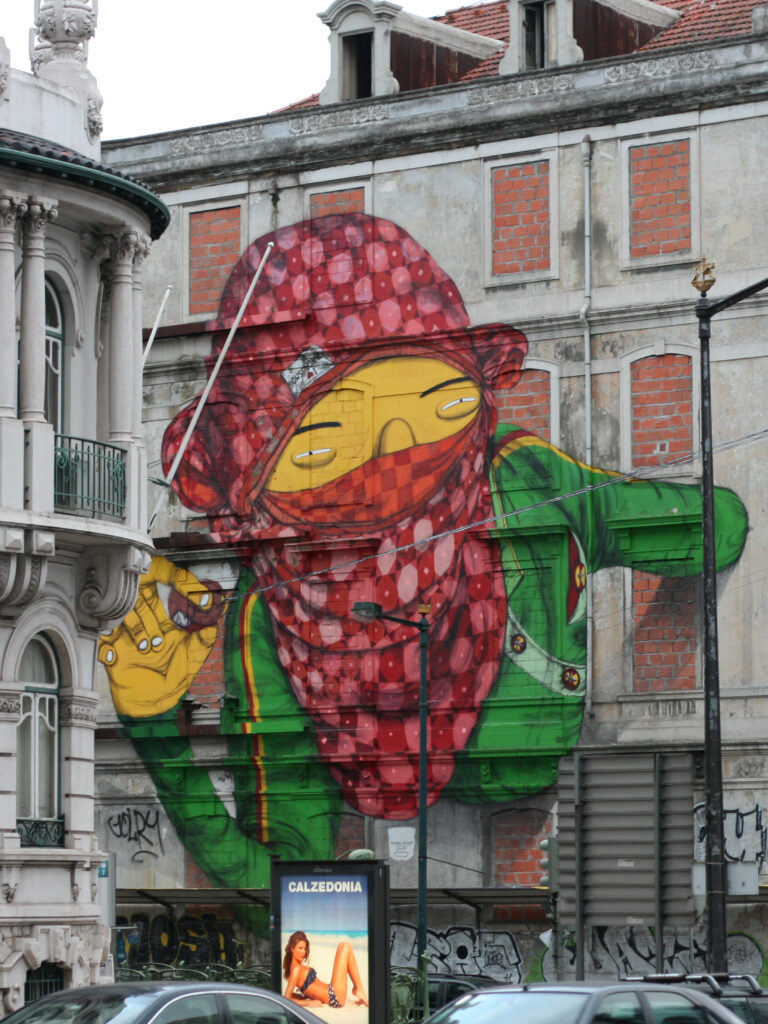
Today, that reclamation has gone global. Cities from Bogotá to Melbourne, from Cape Town to Lisbon, host open-air murals and street art festivals that draw international crowds. Meanwhile, art institutions—once reluctant—have opened their doors. MoCA in Los Angeles hosted a landmark Art in the Streets exhibition in 2011; more recently, the Urban Nation Museum in Berlin has become a permanent home for this once-ephemeral art form.
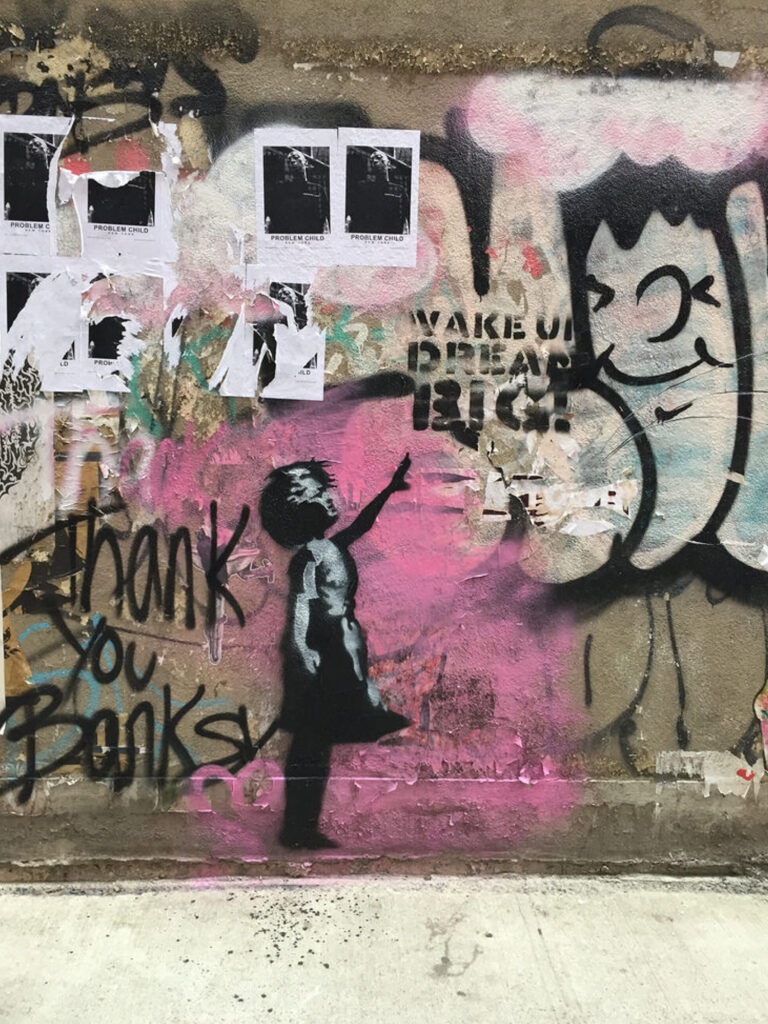
Credit: https://streetartcities.com/markers/16752
One of the most fascinating paradoxes of contemporary street art is its shifting relationship with permanence and commodification. Originally defined by its transience—scrubbed out, painted over, weather-worn—street art is now preserved, even extracted and sold. Banksy’s Girl with Balloon, infamously shredded after auction, was both a protest and performance. “When you take it off the wall, you take away the point,” said British street artist My Dog Sighs in a 2022 interview. “But maybe that contradiction is what keeps it alive.”
Indeed, it is this contradiction that fuels the movement’s continuing relevance.
Street art, at its core, remains rooted in urgency. In Kyiv, murals became symbols of resistance. In the townships of South Africa, walls bear witness to local struggles and aspirations. In European cities, artists respond to climate change, migration, and consumerism in real-time. It is public art in the truest sense—unfiltered, immediate, and accessible.
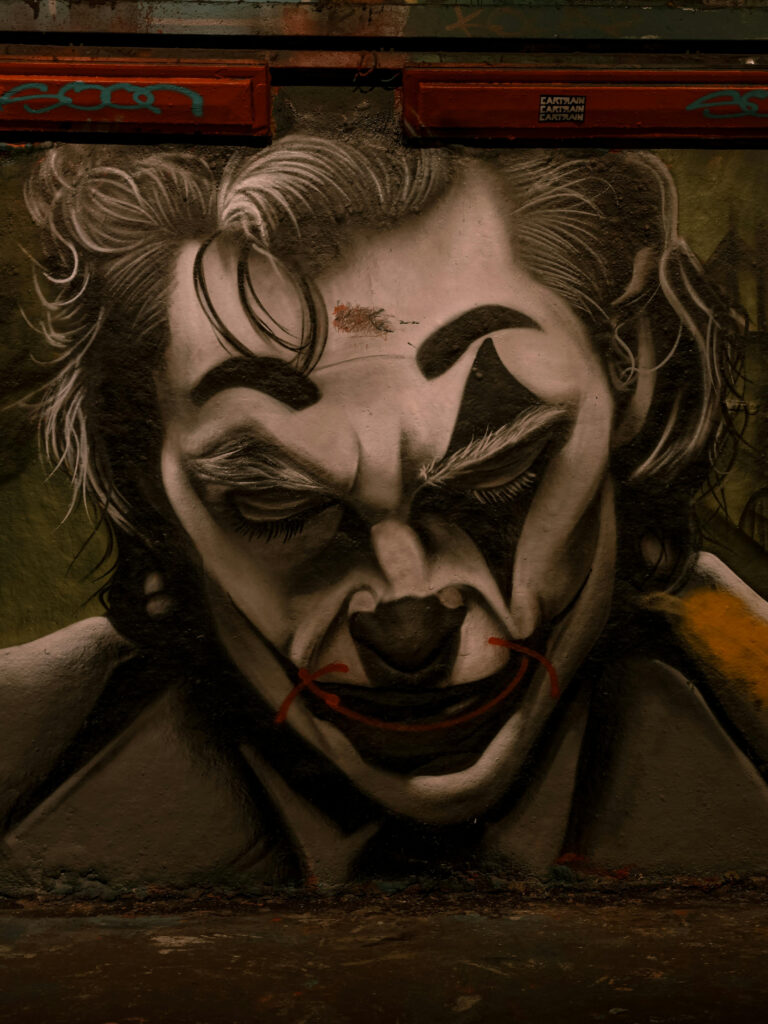
This haunting mural of the Joker, painted in one of London’s famous graffiti tunnels, captures the character’s psychological intensity with stark monochrome detail and blood-red accents. Surrounded by chaotic tags and colour, it stands as a chilling centrepiece in an urban gallery of rebellion and expression.
Credit: Photo by Nathan J Hilton: https://www.pexels.com/photo/joker-graffiti-art-in-london-tunnel-29082396/
The journey from graffiti to gallery is not a story of co-option but of expansion. Street art has not lost its soul; it has simply found new surfaces.
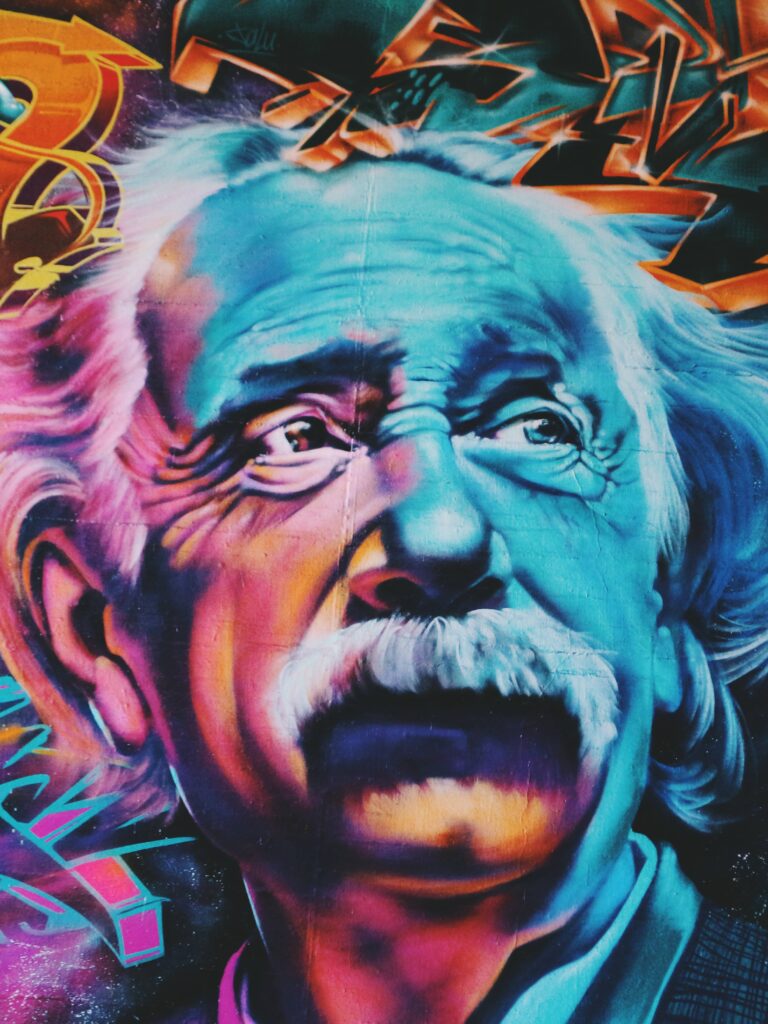
This vivid mural of Albert Einstein bursts with colour and energy, blending scientific genius with urban expression. Surrounded by graffiti tags and cosmic swirls, it reimagines the physicist as a street art icon for curiosity and creativity.
As the lines between outsider and institutional art blur, street art reminds us that powerfully resonant art doesn’t need permission. It only needs a wall—and a voice.