
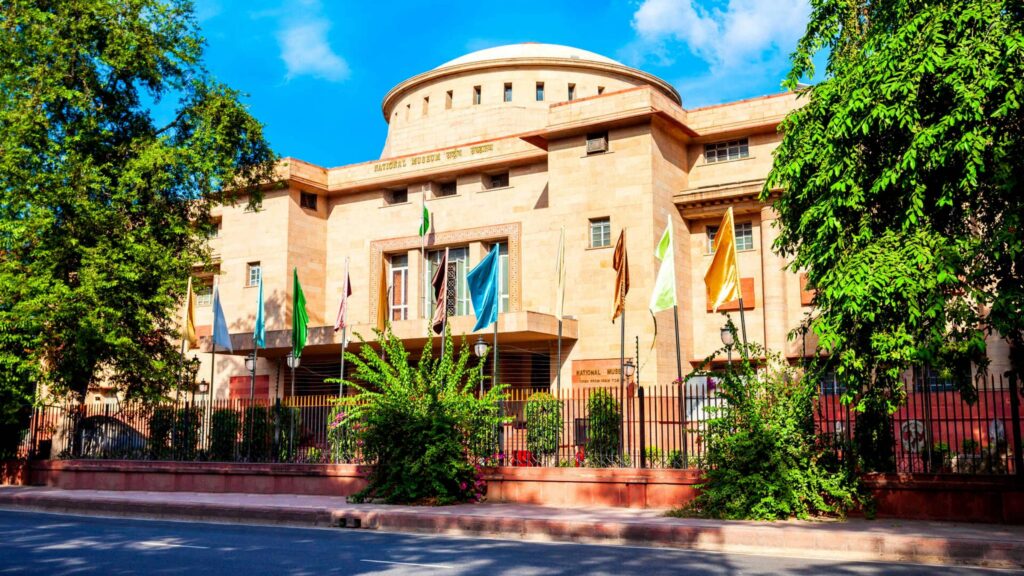
In the ecosystem of Indian art institutions, the National Museum, New Delhi occupies a position that is simultaneously foundational and transitional—it is the country’s largest repository of material culture and, increasingly, the training ground for the next generation of curators and conservators.
Since its founding in 1949, the museum has amassed over 200,000 objects that span five millennia of Indian and Asian history, yet in recent years, its function has expanded beyond preservation and display into active interpretation, academic research, and museological training. The museum’s alliance with the National Museum Institute has strengthened its role in shaping discourse around art conservation, museum education, and heritage policy.
One sentence cannot fully account for the weight the National Museum now carries in defining what gets preserved, how it is displayed, and who gets access to it.
A critical force behind this shift has been the museum’s internal restructuring and a generational change in curatorial leadership, with younger professionals bringing digital fluency, exhibition design sensibility, and interdisciplinary perspectives to longstanding collections.
Key galleries underscore the museum’s breadth and complexity:
- The Harappan Gallery contextualizes India’s earliest urban heritage with precision and scale.
- The Buddhist Art and Relics Section includes internationally significant pieces like the relic casket from Piprahwa.
- The Miniature Painting Gallery, one of the finest in South Asia, is both a connoisseur’s treasure and an educational resource.
- The recently revamped Textile and Decorative Arts sections bring renewed visibility to India’s crafts traditions.
Despite these strengths, the museum faces challenges typical of legacy institutions—infrastructure constraints, limited outreach, and the slow pace of digitization hinder its ability to operate at the scale expected of a global art institution. While select collections are now accessible online, the digital presence remains fragmented and difficult to navigate for the general user or researcher.
The museum’s relevance is also being tested by larger structural shifts, most notably the Central Vista redevelopment project, which has cast uncertainty over the future of the current building and sparked debates on how national cultural institutions are managed and represented.
Yet in many ways, these pressures have galvanized the National Museum’s core team and stakeholders to articulate a sharper institutional vision. Curatorial projects such as the Ajanta: The Enlightened Art exhibition, and partnerships with organizations like Sahapedia and Google Arts & Culture, signal an openness to cross-sector collaboration and content innovation. More significantly, the museum’s increasing role in art education—from conservation science to exhibition planning—positions it as an anchor in India’s museum modernity.
The National Museum is no longer just a site of storage; it is a curatorial laboratory, a pedagogical engine, and a platform for reframing Indian art history in the 21st century.